A school that combines a personal AI tutor for every child with human mentors who teach them to think, question, and create.
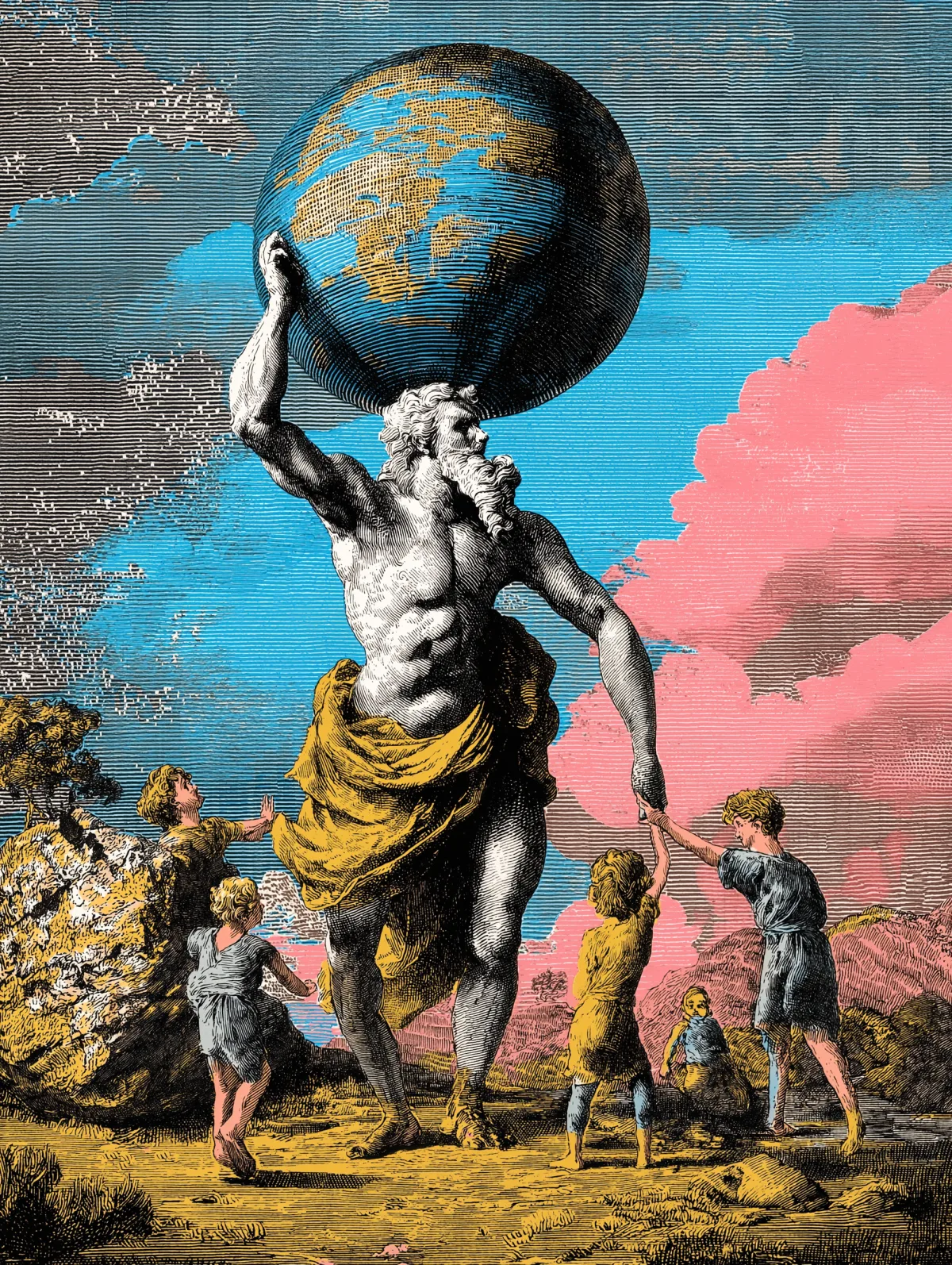
AI will be as ubiquitous in our lives as the air we breathe. ★ Our children will grow up in a world where every question can be answered instantly. Where every piece of information is retrievable. Where machines write, calculate, analyze - often better than humans. ❦ But having answers was never the problem. ☃ In a world where AI can deliver any answer in milliseconds, the ability to have answers has become worthless. The ability is not to have the right answers. The ability is to ask the right questions. ✻ And that's exactly what children unlearn in school. Preschoolers ask 100 questions a day. By age 10, it's down to 2. ❧ We systematically educate curiosity out of them. The question is no longer: What must humans know? The question is: What must humans become?
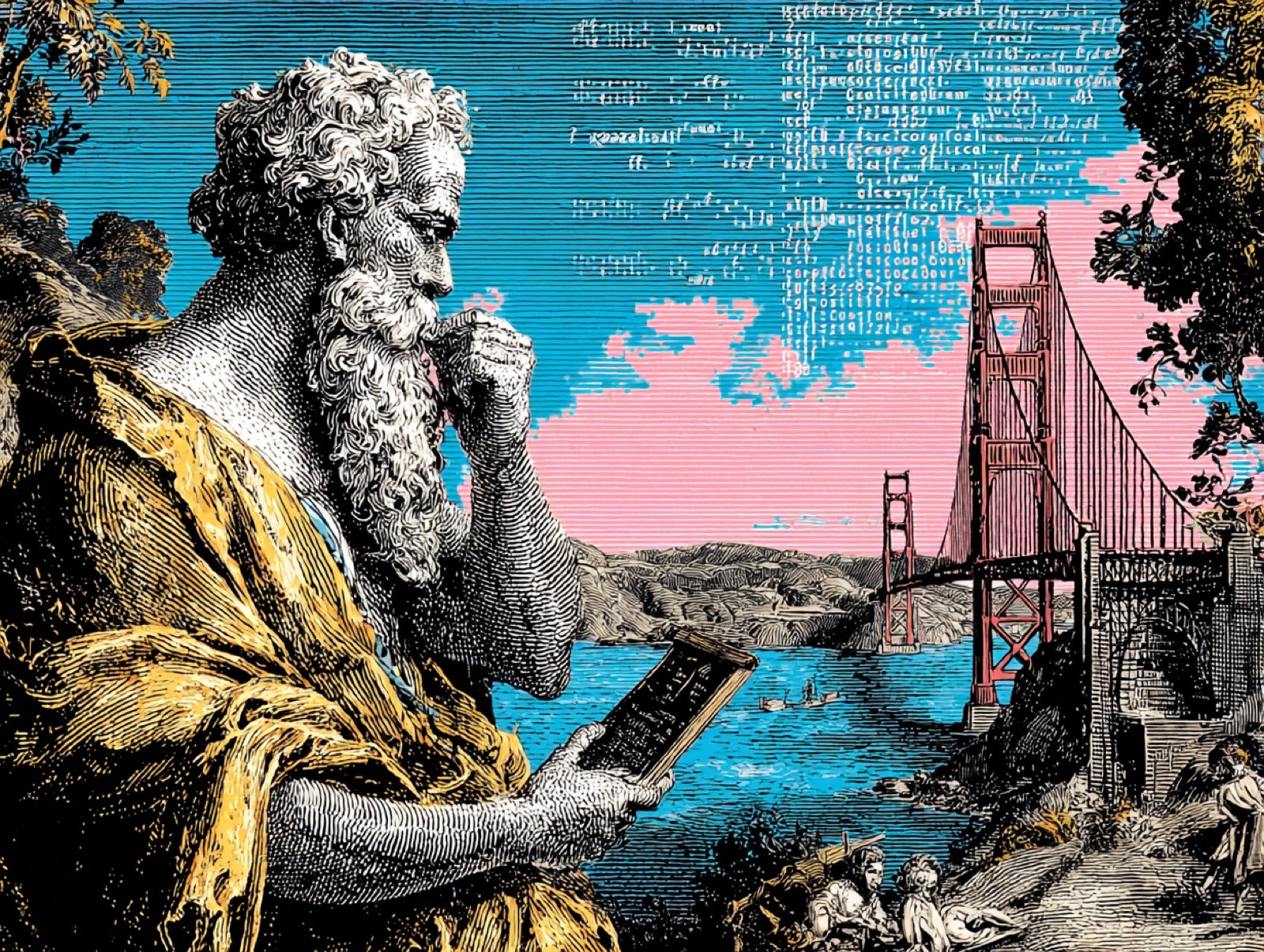
For centuries, the best education was reserved for royalty. Alexander had Aristotle. Everyone else got the factory model.
In 1984, Benjamin Bloom proved what aristocrats always knew: one-on-one tutoring moves a student from the 50th percentile to the 98th. Nothing else comes close.
The problem? Aristotle doesn't scale.
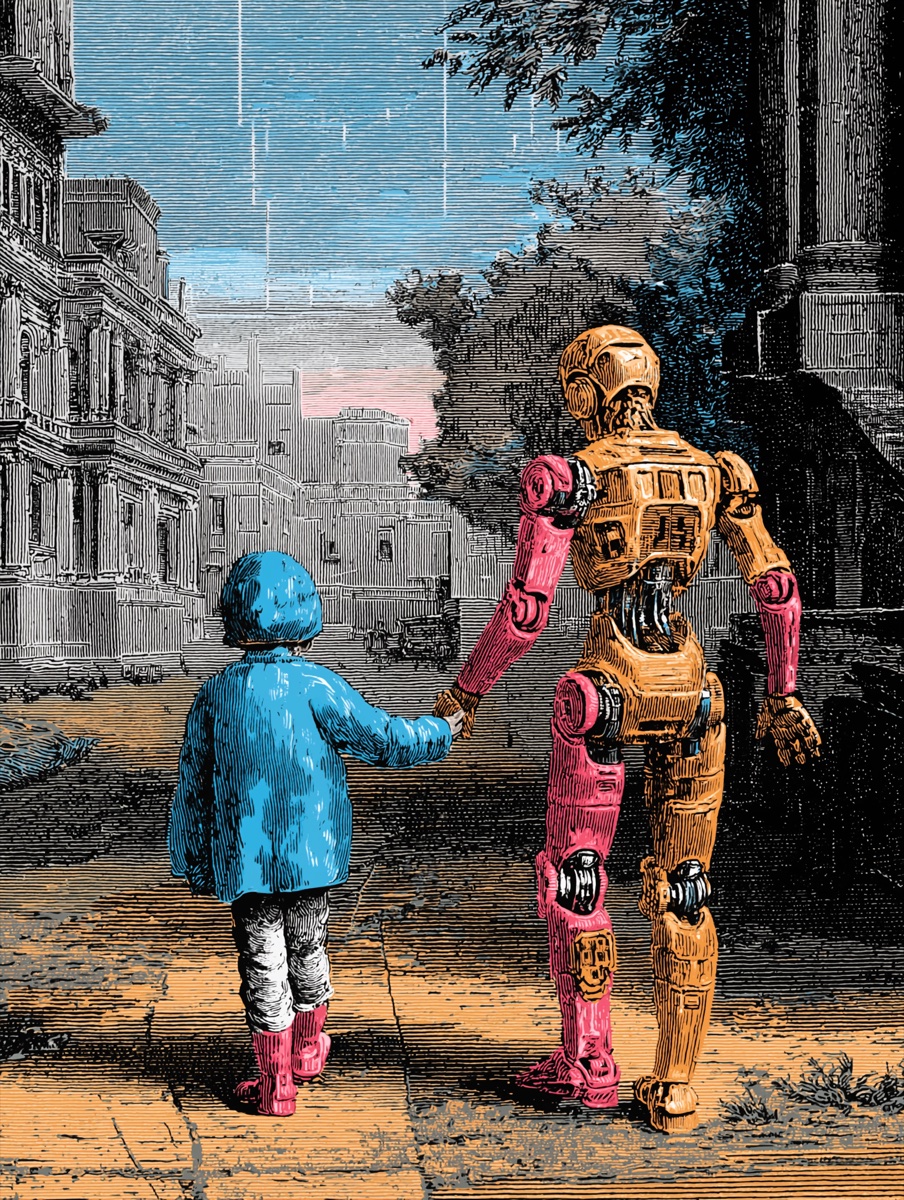
AI changes that. For the first time, every child can have a tutor who knows exactly where they are, adapts to how they learn, and never loses patience.
But why would Alexander still need Aristotle if he had AI? Because AI can explain anything - but it can't look a child in the eye and ask, "Why do you believe that?" It can't calibrate struggle, build character, or model what it means to be human. That's what our Anchors do.
If Bloom's research is real - and we believe it is - then top 5% isn't ambitious. It's the standard.
Every student has a personal AI learning partner - available 24/7, endlessly patient, adapted to their pace.
But that's not the revolution. The revolution is what this frees humans to do. When AI handles explanations and practice, teachers can finally do what only humans can: ask hard questions, build real relationships, and guide formation - not just instruction.
We call them Anchors, not teachers. Psychologists. Athletes. Artists. Scientists. People skilled at asking the right questions - not lecturing from textbooks.
If AI disappeared tomorrow, could your child still learn? At Ainstein, yes.
AI is a tool, not a crutch.
01
Socratic
The art of asking the right questions. Every week, your child presents their work and defends it to peers. You can't fake understanding when 10 kids ask you questions.
02
Critical
AI gives answers. Anchors ask: "What's missing? What's wrong with this?" Your child learns to verify, challenge, and think independently.
03
True Understanding
You only understand something when you can explain it. Every concept: learn it, build it, teach it. Peer teaching isn't extra - it's the test.
01
Percussion
Drums activate both hemispheres of the brain simultaneously. Rhythm is the first thing we hear - our mother's heartbeat. Percussion trains focus, coordination, and the ability to be fully present.
02
Judo, Ballet, Gymnastics
Judo teaches falling and rising - literally and metaphorically. Ballet teaches discipline when no one's watching. Gymnastics teaches overcoming fear. The body is not a transport vehicle for the head.
03
Storytelling & Stage
AI generates content. AI cannot know which story must be told. Your child learns to direct, film, edit, perform - and to stand before an audience with courage.
You can't drum and scroll.
Movement increases BDNF - the protein that builds new neural connections. 60 minutes daily improves cognition by 20%, measurable on MRI. Movement is not a break from learning. Movement is learning.
The Character
Focus. Resilience. Delayed gratification. The discipline to practice when no one's watching. The courage to perform when everyone is.
8:00 - 8:30
AI check-in: "Where did we leave off? What's challenging today?"
8:30 - 12:00
Deep Build Time - real projects, grouped by mastery not age
12:00 - 1:00
Lunch + unstructured play. No screens. 15 hectares of green.
1:00 - 2:30
Socratic Rounds - present, defend, learn from peers
2:30 - 4:00
Movement & Arts - percussion, judo, ballet, stage
No bells. No rows. No lectures. Optional after-school clubs until 6:00 PM.
When your child says "This is hard," that's the moment the brain ❤ grows.
| Traditional | "Efficiency" Schools | Ainstein | |
|---|---|---|---|
| Goal | "Will this be on the test?" | "How fast can I finish?" | "What's worth doing?" |
| AI approach | Ban it | AI does all the teaching | AI as a tool, not crutch |
| Pace | Everyone together | As fast as possible | As deep as necessary |
| Reward | Grades | Projects based on interests / schools as start-up hubs | Mastery |
| Movement | 2 hrs gym | Optional | 6 hrs: drums, judo, stage |
| Proof | Memorization | MAP tests | Top 5% MAP + peer defense |
Some schools promise to "crush academics in 2 hours" so kids can become influencers and entrepreneurs. We think that's backwards.
Optimization
Children as startups
Remove all friction
Speed
Success = followers
Formation
Children as humans becoming
Calibrate productive struggle
Depth
Success = who you are when no one's watching
We're not building a factory for child influencers. We're forming humans.
Twice yearly. Internationally benchmarked. No grade inflation. Formation and rigor. Not one or the other.
The problem isn't screens. It's the wrong kind of dopamine.
Digital Dopamine
No effort → Reward → More seeking
Never satisfied
Natural Dopamine
Effort → Reward → Rest
Satisfaction
Social media is junk food dopamine. We're teaching kids to cook. Land a judo throw after weeks of practice - earned dopamine. Perform on stage - earned dopamine. Explain a concept and watch someone finally get it - the deepest satisfaction.
Effort → Mastery → Pride.
That's the cycle we build.
Social media is junk food dopamine. We're teaching kids to ☀ cook.
Forget coding bootcamps. Coding is the new Latin - AI is the printing press.
01
Orchestration
Break complex problems into AI-assistable parts
02
Evaluation
Know when AI is wrong (it often sounds confident)
03
Direction
Iterate toward quality, recognize good output
04
Independence
If AI disappeared, could you still solve it?
Kids who don't blindly trust or distrust AI. They calibrate.
Credentials
IB Diploma - Gold standard worldwide. Pursuing candidacy 2028.
US High School Diploma - Cognia-accredited.
MAP Testing - Top 5% expected. All students. Twice yearly.
Why not Austrian accreditation? Deliberately. We need pedagogical freedom, not a 250-year-old system.
Details
Compare: Vienna International School ~€25,000 • American International School ~€28,000 • Ainstein €12,000
Enrollment - September 2027
Founding cohort: 150 students
Grade 1 + 2 (ages 6-8)
Grade 5 (ages 10-11)
Grade 7 + 8 + 9 (ages 12-15)
Full K-12 by 2030. Boarding available from Grade 9.
Art Nouveau architecture. Protected green space. A campus that feels safe, protected, and free. Vienna invented compulsory education in 1774. Now Vienna reinvents it.
The problem isn't screens. The problem is what screens are displacing. A child who sleeps well, moves daily, has strong relationships, and creates things can handle screen time fine.
Our approach: displacement by design. We don't ban phones. We make the rest of life so compelling that screens become less interesting - 6 hours/week of drums, judo, and stage. You can't drum and scroll.
During learning blocks: phones away. During breaks: allowed. After school: family decision.
Good. That's where learning happens. The brain doesn't grow through passive intake. It grows through wrestling with difficulty.
We celebrate productive confusion. Our "Confusion Ledger" tracks where students get stuck - not to avoid difficulty, but to work there. Anchors ask: "What was hard for you today?" not "What did you accomplish?"
When your child says "This is hard," that's not a problem. That's the moment the brain grows.
The elements are all proven: Socratic method (2,400 years), peer teaching (decades of research), AI tutoring (Bloom's 2-sigma study, 1984), movement and cognition (established neuroscience).
What's new is the combination. And we're pursuing full IB accreditation - the global gold standard, not a fringe credential.
Yes. Your child graduates with an IB Diploma (recognized worldwide), a US High School Diploma (Cognia-accredited), and a portfolio of real work - projects they built, explained, and defended.
Most applicants have grades. Your child will have evidence: work they can show, thinking they can explain, and the ability to handle hard questions.
Three factors: less overhead (lean administration, no bloated bureaucracy), AI integration (planning and documentation that traditionally requires admin staff is AI-supported), and different priorities (we invest in pedagogy, not prestige marketing).
Cheaper doesn't mean worse. We measure ourselves against the best - and make it accessible.
Not traditional homework. No worksheets. No busywork. Your child has 24/7 access to their AI learning partner. If they're excited about a project, they keep working. If they need rest, they rest.
All deep academic work happens during the school day (8:30-4:00). Home is for family, rest, and personal interests.
That's exactly what the Removal Test is for. Every skill we teach must pass this test: if AI disappeared tomorrow, could your child still do the essential work?
Your child learns how to learn, not just what. AI is a tool, not a dependency.
English is the primary language. Every student also studies their mother tongue as a second language: Austrian children study German, a child with French parents studies French, a child from a Japanese family studies Japanese.
Mastering your own language and culture is the foundation for true cosmopolitanism.
Four ways: MAP Testing (twice yearly, internationally benchmarked, top 5% expected), portfolios (real work they can show and explain), peer assessments (feedback from Socratic Rounds), and self-reflection (students evaluate their own progress).
We measure what students know, what they can do, and who they're becoming.
We call them Anchors - not teachers - because they hold the human connection while AI carries the cognitive load. They don't lecture. They ask questions, calibrate struggle, and witness breakthroughs.
Backgrounds: Psychologists. Athletes. Artists. Scientists. Entrepreneurs. Former teachers frustrated with the system. What counts: genuine interest in young people, ability to ask the right questions, willingness to learn themselves.
We're building a community, not an institution.